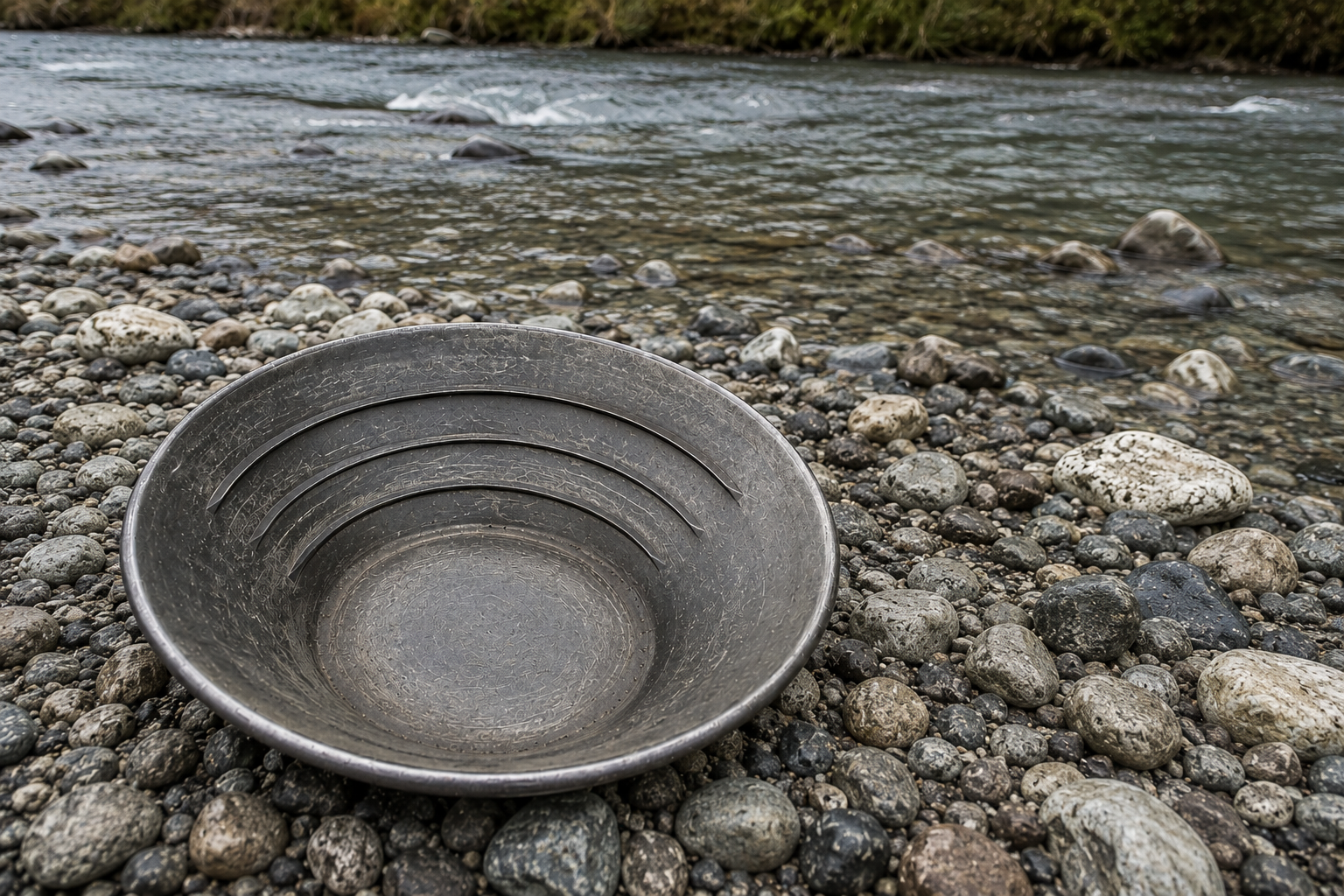
John Sutter was the first to hear; it was his land after all. His carpenter, James Marshall, discovered flakes of gold in the river bed. They decided to keep it a secret, but as happens with secrets, it got out. And it ran all the way to the President of the United States, James Polk, who mentioned the discovery in his 1848 State of the Union address.
Just like that, hundreds of thousands from around the world got “gold fever.” They rushed towards California sparking the Gold Rush.
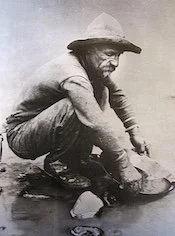
Those 49ers dreamed of a prosperity they’d been unable to find elsewhere. Driven by the fever, they traversed mountains and fought off wild animals, hoping to reach riches they had no other way of finding.
For a few, it worked. John and Daniel Murphy made millions. So did John Bidwell, but most others have been lost to history.
For the rest, turning dreams to gold was harder than expected. Reality turned their fever cool, while others bled them. Historians have found the winners of the gold rush were those who sold to the miners. Many made more from the rush than the miners themselves. In fact, most miners would have been better off remaining day laborers back east. (Clay and Jones, Journal of Economic History)
We still know the names of some who sold to find their gold. Levi Strauss sold jeans. Henry Wells and William Fargo provided banking and shipping. John Studebaker sold wheelbarrows and serviced wagons. They saw a need and met it.
They did nothing wrong, but others did.
Some stole from the miners—legally of course. They “sold” eggs for $3 each, more than $80 in today's money. Flour went for $13 a bag, nearly $365 today. (Britannica, California State Parks) They knew it was robbery. Many miners were mined by those who tried to meet their desires.
The gold rush stands as a cautionary tale of how a partnership towards a common goal can end in poverty for the one seeking and riches for the one helping.
The Disciplemaking Rush
The American church is in the midst of a “disciplemaking rush.” Over the past ten years, thousands of churches have started their intentional disciplemaking journey. The rush to help everyday people become equipped and empowered as disciplemakers is on.
The disciplemaking rush is fueled by the best of intentions. These pilgrims dream of the many who have yet to embrace Jesus, of those who have yet to hear of Him, and of others who merely listen to His word. They wake up each morning determined to find a way to reach everyone.
As they go, they meet many who are happy to help. These organizations have detailed maps and instructions about how to do the work. They have their way. They offer resources that leverage the best thinking and tools Western culture has to offer. Their thing has strategies that revolve around Biblical information, cleverly packaged, easily remembered, and quickly scaled so that others will embrace Jesus.
Best of all? Their thing comes with the promise of effectiveness even if individuals aren’t able to personally disciple others.
They’re doing nothing wrong.
Most of them aren’t lying. In a culture of consumerism, there is a market for everything, but it’s the consumer’s responsibility to sort through the options. That’s the mining work. Want a pen? Ballpoint? Gel? Fountain? Felt-tip? The decision is yours to make.

In disciplemaking, the market is flooded by options that “mine the miner.” They help church leaders carry the disciplemaking desire without ever satisfying it. Instead, church leaders are enrolled in a never-ending cycle. One curriculum (or book) leads to the next which leads to the next and the next. When one is finished, rich it’s time to find the next one. After all, we can always learn more. After a while the solution begins to feel like a hamster wheel.
Skills That Don’t Scale
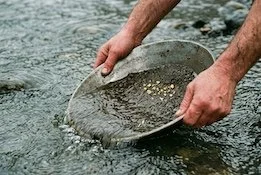
The men who actually found gold found it bent over cold water, one panful of sediment at a time. The pan wasn’t costly; the work was. It was slow, unglamorous, and often painful.
Sure, Levi Strauss sold good jeans and Studebaker sold durable wheelbarrows, but jeans don’t dig and wheelbarrows don’t pan. For those who struck it rich, it was the miner’s work, not the product around them that made the difference. The miner had to mine.
For most churches, disciple making that’s traced back to curriculums doesn’t work because curriculum can’t get in the water. Reading books and running groups with no one discipling puts churches further behind than not doing it at all, because church leaders come to believe that disciple making itself doesn’t work.
Panning for gold happens in the river, and disciple making happens through life-to-life relationships. It can’t be shipped in boxes or scaled in classes.
The Decision Is Yours to Make
Are you part of the disciplemaking gold rush? Is your church?
As you sort through the endless products that promise to solve your discipleship problems, ask the question, does it equip you to disciple others or does it promise to do the work for you?
Ask it of the curriculum on your desk. Ask it of the new study you’re considering this fall. Ask it of the conference you may attend. Ask it of anything I send.
In the church, gold isn’t scarce and I’m not talking about money. Every believer is called to be a priest and disciple maker. Every. One. The failure isn't the odds in the river. It's that almost nobody is standing in it.
The pan can’t disciple anyone.
Get in the water.
——
Find this helpful? Want to grow as a disciple or disciple maker? Check out my books: The Bicycle Illustration and The Foundation of a Disciple Making Culture. Or my monthly Disciple-Making Briefing Too much to read? Check out my Podcast, “The Practitioners’ Podcast” for short, hyper focused disciple making episodes wherever you get podcasts!